Death of Conrad
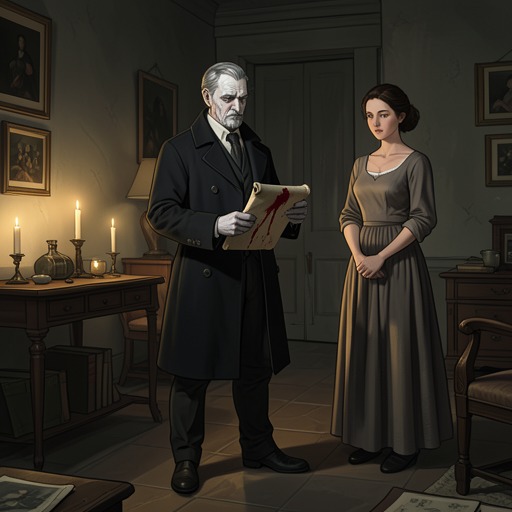
The Castle of OtrantoConrad’s death is the catastrophic interruption that opens the novel’s central crisis: on the day his wedding is to be celebrated, the young prince is crushed beneath an immense helmet in the courtyard of the Castle of Otranto. The unexplained apparition turns a dynastic ceremony into a scene of death and reveals Manfred’s attention fixed less on his son’s loss than on the monstrous object that caused it.
Ceremony Interrupted
Conrad’s birthday has been chosen for his wedding, and the company is assembled in the castle chapel, ready for the divine office. The ceremony belongs to a hurried dynastic plan: Manfred has pressed for the marriage despite Conrad’s youth and infirmities, while those around him have associated his haste with an old prophecy that the castle and lordship will pass from the ruling family when their true owner has grown too large to inhabit the castle.
The wedding stops when Conrad is missing. Manfred sends a servant to summon him, but the messenger returns breathless and unable to explain what has happened. He can only point toward the courtyard. As the company hears cries and confusion from outside, Hippolita faints in anxiety for her son. Matilda remains with her mother, while Isabella stays to help and to avoid displaying impatience for a bridegroom for whom she feels little affection.
The Discovery in the Courtyard
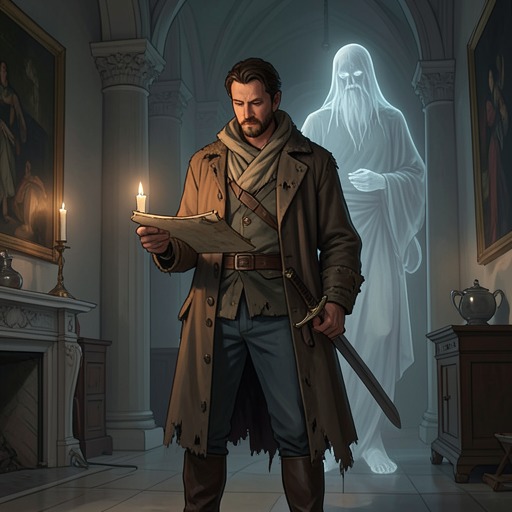
Manfred goes to the courtyard to discover the cause of the alarm. He first sees servants attempting to raise what appears to him to be a mountain of black plumes. Their cries identify the object as a helmet, but do not explain the disaster. Advancing through the confusion, Manfred sees Conrad’s body crushed and almost buried beneath it.
The helmet is described as a hundred times larger than any casque made for a human being, with a proportionately vast quantity of black feathers. Its scale makes the killing more than an ordinary accident in the eyes of those present: the material evidence of Conrad’s death is also a tremendous and inexplicable phenomenon. The narrative moves from the unseen cause, conveyed through the servant’s terror and the crowd’s cries, to the exposed body beneath the monstrous object.
Manfred’s Reaction and Immediate Consequences
The spectacle leaves Manfred speechless, but his silence outlasts the first shock of grief. He fixes his gaze on the helmet, touches and examines it, and seems absorbed in the portent rather than in his son’s mangled remains. Even the body does not draw his attention away from the object that has caused the death.
This response astonishes those who know Manfred’s partial fondness for Conrad. The servants carry the prince’s disfigured corpse into the hall without receiving any direction from him. Manfred also fails to attend to Hippolita and Matilda, who remain in the chapel. His first spoken order instead directs the household to take care of Isabella; the domestics interpret it as concern for her condition and hurry to assist her. The ceremony has yielded to death, and Manfred’s immediate priorities expose the unsettling force the helmet exerts over him.